

Some news does not just inform you — it breaks you from inside.
The tragic killing of Angel Chakma in Dehradun is one such incident.

Today, I write not as a professional, not as a businessman, but as a concerned Indian citizen. A citizen who believes in the idea of India — an India that is united, compassionate, and respectful of every human life.
Angel Chakma was young. He was ambitious. He was a student who left his home in the North East with dreams that thousands of Indian youth carry every day — to study, to grow, and to build a better future. He believed that anywhere in India could be his home.
That belief cost him his life.
A Son of India, A Son of a Soldier
Angel’s father serves in the Border Security Force (BSF) — an organisation that stands guard day and night so that the rest of us can live safely. While his father protected the borders of the nation, Angel lost his life inside the nation.
This irony is painful.
This injustice is unacceptable.
When the son of a soldier is killed due to violence and hatred, it raises a serious question: Are we failing the very people who protect us?
This Is Not Just One Crime — It Is a Mirror
Angel Chakma’s murder is not only about law and order.
It is about mindsets.
It is about prejudice.
It is about how easily humanity collapses when ignorance takes control.
India is known for its diversity — languages, cultures, religions, traditions. The North East is an inseparable part of this diversity. Its people are Indians in every sense — by constitution, by contribution, and by spirit.
Yet, time and again, people from the North East face discrimination, mockery, stereotyping, and sometimes violence.
Angel’s death forces us to confront a bitter truth:
Development without humanity is dangerous.
As Someone Who Deeply Respects the North East
I have lived, worked, and grown with people from the North East. I have seen their discipline, their honesty, their work ethic, and their deep respect for India.
They are doctors, engineers, students, soldiers, entrepreneurs, artists — nation builders.
To judge them by appearance or accent is not just wrong — it is anti-Indian.
I am sharing a picture with one of my best friends from North East, Mr. Andrew Kamei.
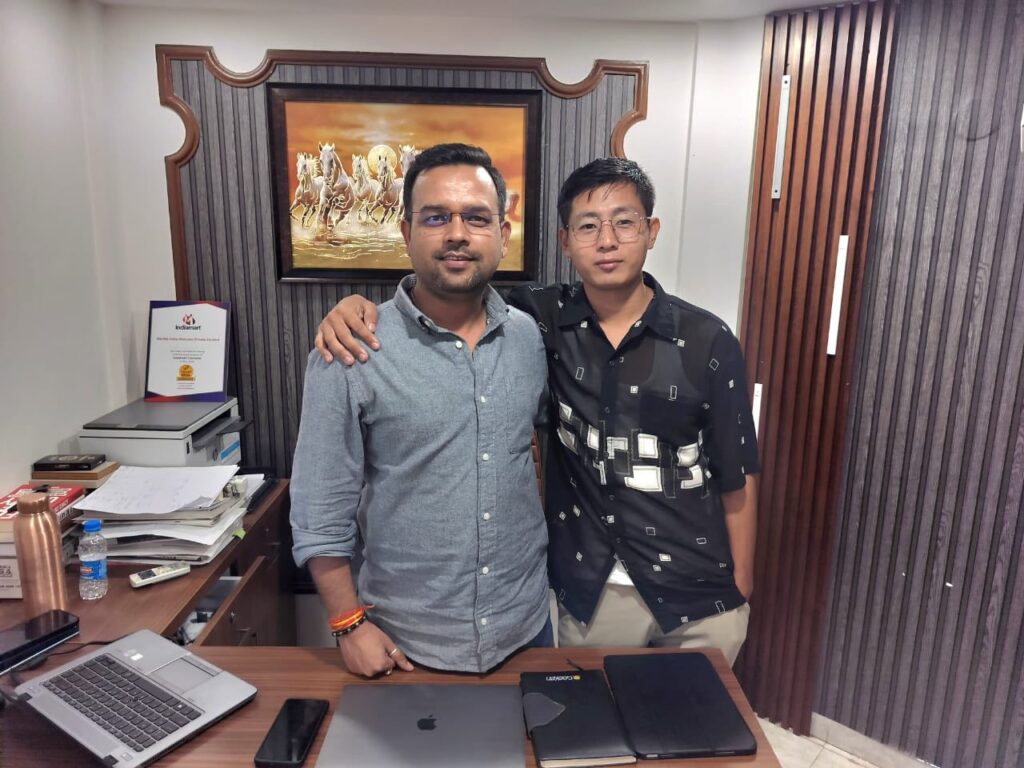
Patriotism Is a Daily Practice, Not a Performance
True patriotism is not limited to waving flags or posting slogans on social media.
Patriotism means:
- Standing against injustice
- Protecting fellow citizens
- Respecting diversity
- Speaking when silence becomes dangerous
If we claim to love India, we must love all Indians.
Angel Chakma’s death reminds us that patriotism begins with humanity and empathy, not hatred and superiority.
Justice Must Be Strong, Swift, and Visible
Angel’s family deserves more than condolences. They deserve justice.
Justice that is:
- Transparent
- Unbiased
- Timely
Every delay weakens public trust. Every compromise encourages future crimes.
When students and professionals move to different cities, they should feel safe — not afraid. Safety is not a privilege; it is a basic right.
What Kind of India Do We Want to Build?
Do we want an India where:
- Young people fear stepping out at night?
- Parents worry about sending children for education?
- Prejudice decides who belongs and who doesn’t?
Or do we want an India where:
- Diversity is celebrated
- Differences are respected
- Every citizen feels protected
Angel’s life and death demand that we answer this honestly.
A Personal Appeal to Every Indian
I write this blog with pain, but also with hope.
Hope that:
- We learn from this tragedy
- We educate ourselves and others
- We reject hate in all forms
Let Angel Chakma not become just another forgotten headline.
Let his story become a turning point — where India chooses empathy over ego, unity over ignorance, and justice over silence.
Rest in Peace, Angel Chakma

You were not just a student.
You were not just from the North East.
You were an Indian, and your life mattered.
May your soul rest in peace.
May your story awaken our conscience.
And may India become kinder, stronger, and more united because of you.
My Prayers-
Rajan Shukla
New Delhi, India